


As AI-driven search and zero-click experiences are influencing how users discover brands, traditional SEO KPIs like traffic and rankings alone no longer capture the full picture of organic growth. Performance needs to be evaluated across a layered measurement stack that connects visibility, demand signals, and downstream business outcomes.
For years, SEO reporting followed a familiar script: Check rankings, check traffic, check conversions, and move on. That script still has value, but it was built for a search experience where users typed a query, scanned a list of blue links, and clicked on one. But AI Overviews, generative answers, and zero-click experiences have changed that path. A brand can now be seen, cited, and even trusted by a user who never lands on the website at all.
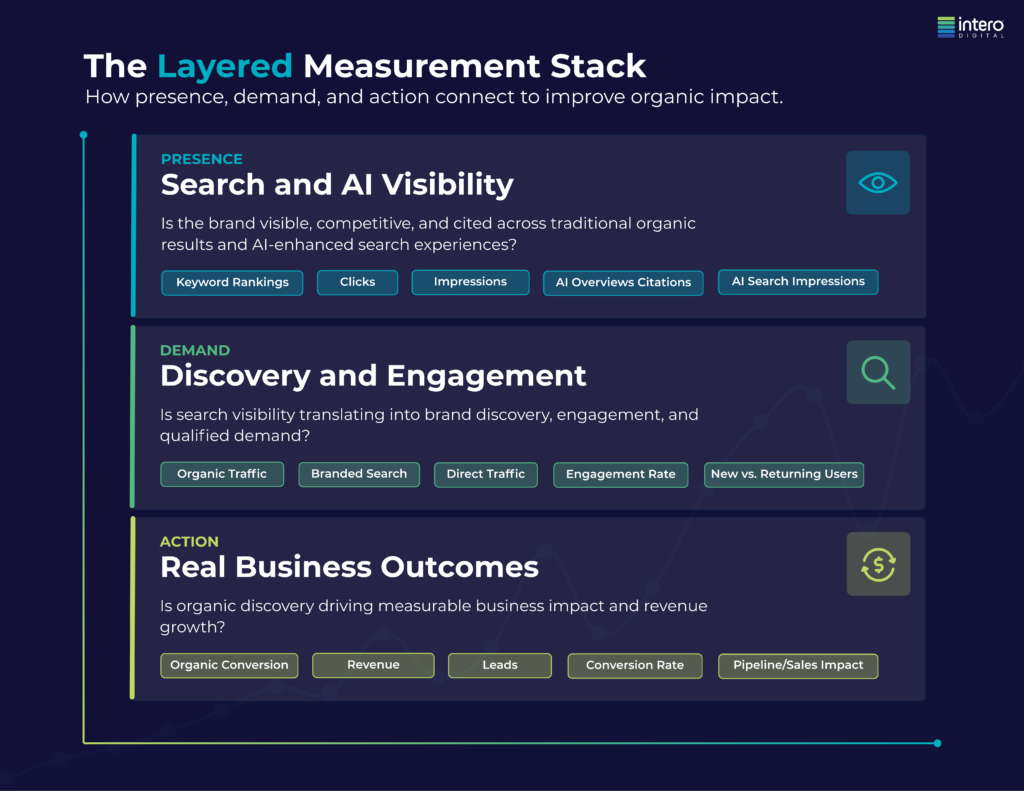
That shift doesn’t mean traditional KPIs are obsolete. It means they need some company. At Intero Digital, we’ve found it helpful to think about organic performance as three connected layers, each answering a different question about how AI-influenced search is working for the business.
Layer 1: Search and AI Visibility (Presence)
The first layer asks the most basic question: Is the brand visible?
This is where familiar KPIs like keyword rankings, clicks, and impressions still do real work. Rankings remain a foundational signal of competitiveness in traditional organic results, but they now need to be read alongside how a brand shows up in AI-enhanced search experiences, too.
That’s why AI Overviews citations and impression lift in AI search belong in this layer. Being cited inside an AI Overview signals that a generative engine recognizes the brand as a trustworthy source, even if the user never clicks through. And tracking impressions specifically on pages where AI Overviews appear shows whether content is earning visibility in AI-influenced environments, separate from whether it’s earning clicks. Watching for shifts in the click-through rate on AI-influenced queries rounds out this layer, as it tells us whether AI features are changing click behavior even when overall visibility holds steady.
Layer 2: Discovery and Engagement (Demand)
The second layer looks at whether that presence is translating into actual discovery, engagement, and demand.
Organic traffic is still a core signal here, but it can no longer be read in isolation. Traffic is declining across many queries and industries simply because AI answers and zero-click experiences are resolving searches before a user ever visits a site. So we pair traffic with engagement rate and new-versus-returning user data to understand what that traffic is actually made of: Is search introducing new audiences, deepening engagement with existing ones, or both?
Two other signals matter especially in an AI-influenced world: direct traffic lift and branded search growth. Both act as proxies for brand recall that AI answers create but don’t directly measure. When someone gets an answer from an AI Overview, remembers the brand, and later types the URL directly or searches the brand name outright, that’s discovery working exactly as intended. It just doesn’t show up as a click on the original AI-influenced query.
Layer 3: Real Business Outcomes (Action)
The final layer answers the question every stakeholder cares about: Does any of this move the business?
Organic conversions, conversion rate, revenue, leads, and pipeline or sales impact all live here.
Conversion rate is particularly telling in this new landscape. If AI-driven visibility is bringing in more qualified traffic, the conversion rate should reflect it because it’s a direct read on whether the audience arriving from search is high-intent. Revenue and pipeline impact close the loop, connecting organic performance to the outcomes that justify the investment in the first place, whether that’s traced through direct attribution or a broader view of how organic search contributes to the sales pipeline over time.
Why the Layered Approach Matters Now
None of these layers tell the full story alone.
A brand could see rankings and AI Overviews citations climb while traffic declines and read that as a failure when it’s really a sign that generative engines are answering queries directly rather than sending users to click through. Without the demand and outcome layers to contextualize that shift, it’s easy to draw the wrong conclusion from a single metric moving in an unexpected direction.
That’s the real case for measuring in layers rather than in isolated KPIs.
- Presence signals like citations and impressions tell us whether the brand is part of the conversation.
- Demand signals like branded search and direct traffic lift tell us whether that presence is building recognition.
- Business outcomes tell us whether any of it is worth the effort.
Together, they give a far more honest picture of organic performance in a search landscape where the click is no longer the only, or even the primary, signal of success.
As AI Overviews and generative answers continue to reshape how people discover brands, the measurement frameworks built for a 10-blue-links world simply won’t keep pace. The brands that adapt their KPIs now, before AI-influenced search becomes the default rather than the exception, will be the ones with a clear, defensible answer the next time a stakeholder asks what SEO is delivering.
Ready to Stop Guessing and Start Growing?
Let’s build a digital marketing program that aligns with your revenue goals and strengthens your bottom line.